The World Cup in numbers: the gap between forecast and reality is the real lesson
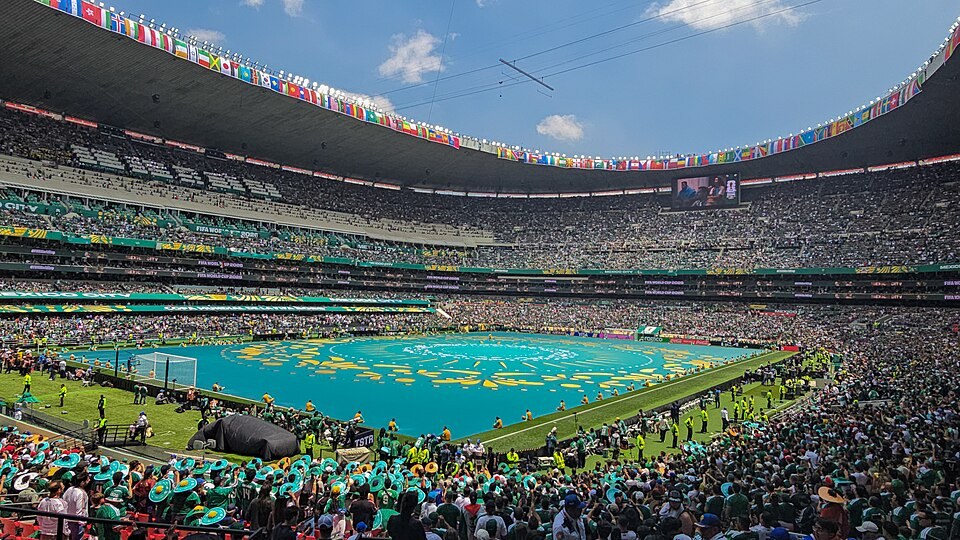
- More than 60 billion pesos and 5.5 million visitors were expected. Independent measurements put the real effect below forecast: Deloitte estimates USD 2.543 billion and INEGI records only 1.1% more international tourists in June.
- The effect was price rather than volume: hotel rates rose sharply while June occupancy fell in Mexico City and Guadalajara.
- Seven out of ten restaurants saw no increase in sales, and ANTAD retail closed June in negative territory.
- In beverages, the World Cup moved beer and low-ABV in supermarkets, cash & carry and on-premise; wine and spirits closed June at −8.8% in retail. It redistributed consumption more than it created it.
More than 60 billion pesos of economic spillover, 5.5 million visitors, 20% more beer. For months, those were the figures on which hotels, restaurants, distributors and brands built their year. Now that the tournament is over and the balances are published, reality falls short in almost every column, and the distance between what was promised and what arrived has left an industry that was counting on that money out in the cold. That distance, more than any single figure, is the real lesson.
Results are far from expectations, depending on who measures them
Before the tournament, the Ministry of Tourism and the National Alliance of Small Retailers spoke of a spillover above 60 billion pesos and more than 5.5 million visitors. Their official balance is not far from those figures, with one caveat: their traveler count includes domestic trips; it is not comparable with the 5.5 million visitors discussed before the tournament, which were understood as international arrivals.
Independent measurements are colder. Deloitte puts the impact at USD 2.543 billion, equivalent to 0.12% of GDP. Tourists who traveled exclusively for the World Cup numbered 494,000. But the hardest figure comes from INEGI: in June, the month of the group stage, 4.11 million international tourists arrived, 1.1% more than in June of the previous year, and air arrivals fell 5.3%. Spending did grow, by 5.9%, because each visitor spent more. Because prices went up.
What all of them share is the direction: the World Cup left money, but less than was promised, and it left it mostly in the form of price.
Hotels, restaurants and retail: occupancy down, prices up
Hotels. Sectur reports average occupancy of 66% over the five weeks. The hotel associations of each host city tell a different story for the month of June. In Mexico City and Guadalajara, occupancy was lower than the previous June, while in Monterrey it rose four points. Deloitte sums up the pattern: lodging came in 47% below forecast and rates in the capital rose 47%. Fewer rooms filled; but they sold for more.
Restaurants. CANIRAC measured the first month of the tournament: seven out of ten restaurants saw no increase in sales. The effect was concentrated in specific formats and locations. Sixty-five percent of establishments detected no tourist presence. Around 15,000 temporary jobs were created versus the 39,000 the chamber expected.
Retail. ANTAD chains closed June with a 1.6% drop in same-store sales: supermarkets −2.7%, department stores −3.1%, specialty stores +3.1%. For the first half of the year, sales are up 1.5%, less than half of the 3.9% forecast for the year.
Beverages: what the World Cup moved and what it didn't
Brewers had anticipated in March a demand increase of up to 20% during the tournament. In a first, partial reading, companies such as AB InBev report low-teens volume growth for the zone in the second quarter (not broken out). In soft drinks, UBS concluded, after reviewing the distribution channel and June air traffic, that the tournament generated "little or no net additional demand during the quarter" for Arca Continental.
The ISCAM and Nielsen panels for wine and spirits show where consumption moved. In June, supermarkets recorded their highest seasonal peak in eight years, driven by promotional activity and by a price gap in their favor versus wholesale. In the wholesale channel, on-premise accounts grew 8% in value and almost 10% in volume, and cash & carry 19% in value, while pure wholesale fell 19%.
In wine and spirits specifically, modern and specialized retail closed June in negative territory: −8.8% in cases and −8.7% in value versus June of the previous year, with table wine down 12% and gin, vodka and brandy in negative double digits.
What grew was low-ABV (+31% in value) and, within it, mixed drinks (+42%): match-day consumption at home and in bars. High-proof spirits lost almost 12% in value in the same month.
The conclusion for the sector is uncomfortable but useful: across the market as a whole, the World Cup did not create demand for wine or spirits; retail closed June in the red and what grew in wholesale was low-ABV.
What to learn from all this
Three lessons that hold beyond football.
An event is an activation window, not a strategy. The data show the effect was real but bounded: match days, specific formats, specific areas. A commercial plan that depended on the World Cup to make the year had no plan; it had a calendar.
The effect of a major event is usually price, not volume. Hotels with the same occupancy, or lower, and rates 40% higher; restaurants with the same traffic and bigger checks in the hot zones. For a brand, that means the margin went to the point of sale, not to the supplier.
Consumption redistributes before it grows. The same week supermarkets were breaking their seasonal record, pure wholesale was falling 19% and specialized wine and spirits stores were losing 15% in cases. Knowing which channel and which occasion the consumer will be in is worth more than knowing that "there will be more consumption."
For a brand planning its growth in Mexico, the right question is not which event comes next. It is in which channel, at what price and with which partner the product will rotate when there is no match to watch.
- Pre-tournament expectations: Sectur and ANPEC (March 2026), via El Imparcial
- Brewers' expectations (March 2026), via El Financiero
- Ministry of Tourism (Sectur), World Cup 2026 balance, July 23, 2026, via Excélsior
- Deloitte, «¿Qué sucede después del Mundial? El impacto económico en los negocios», July 2026, via El Financiero
- INEGI, International Travelers Survey, June 2026, via LatinUS
- Hotel associations of Mexico City, Nuevo León and Jalisco, June 2026 occupancy, via El Universal
- CANIRAC, national survey on restaurant performance during the World Cup, July 10, 2026, via El Universal
- ANTAD, June 2026 sales, via El Financiero
- AB InBev, second-quarter 2026 results (Middle Americas zone), July 29, 2026
- UBS on Arca Continental, via El Heraldo de México, July 10, 2026
- ISCAM / Nielsen, Modern + Specialized retail panel and wine & spirits wholesale channel, June 2026